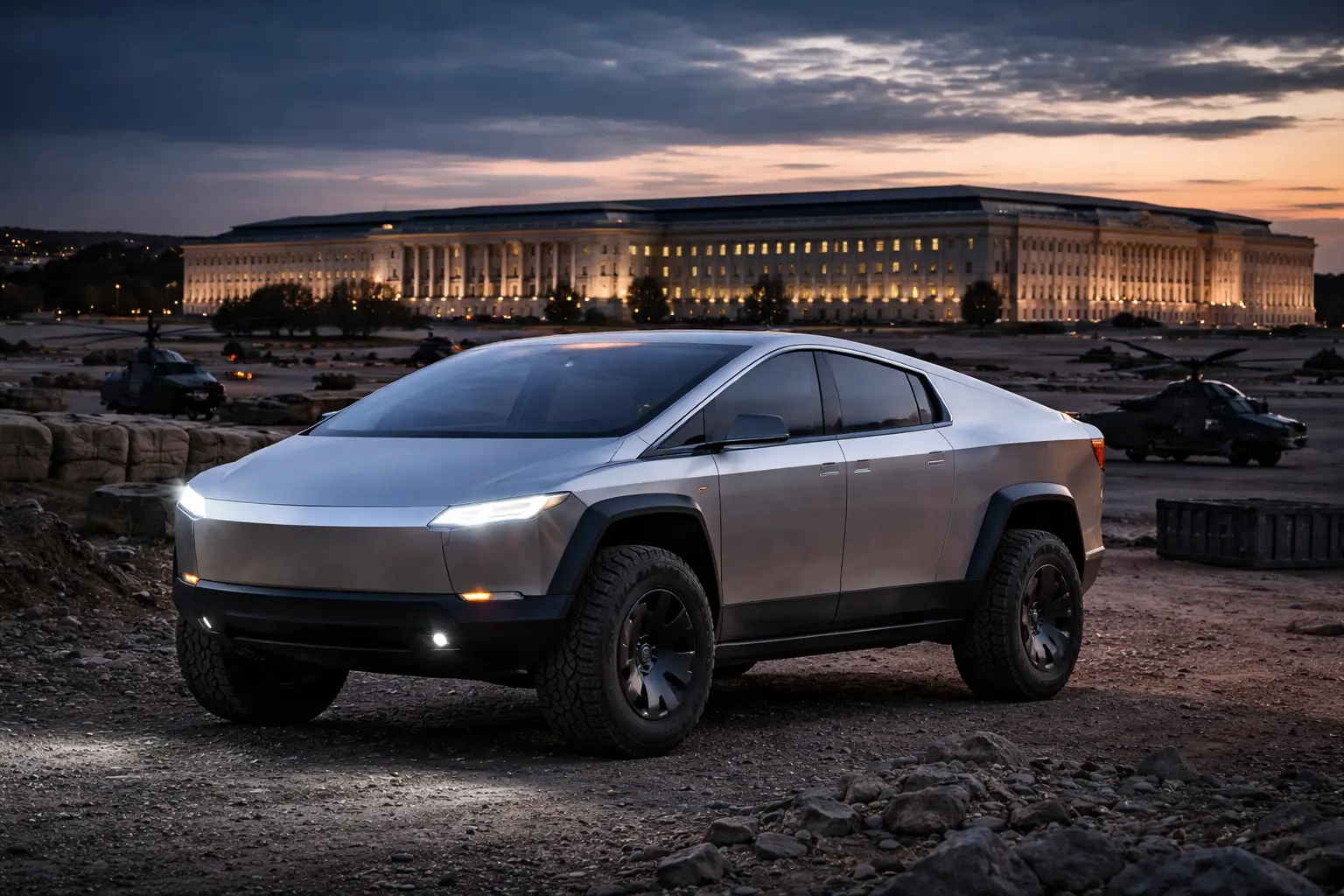
The phrase Pentagon Big Tech Tesla Cybertruck sounds like a mashup of unrelated headlines, but it describes a real and accelerating shift: the US military is seriously evaluating electric vehicles — including Tesla’s Cybertruck — while deepening its partnerships with Silicon Valley giants. What was once the domain of traditional defense contractors is being reshaped by commercial technology, and the implications for how America fights, moves, and powers its forces are profound.
This is not about the Pentagon buying Cybertrucks for generals to commute in. It is about testing whether commercial electric platforms can handle military roles — from base transport to tactical logistics — and about a broader embrace of big tech’s software, AI, and manufacturing innovations. Let us unpack what is actually happening, what the Cybertruck brings to the table, and why defense experts are paying close attention.
Pentagon Big Tech Tesla Cybertruck: Why the Pentagon Is Interested in Electric Trucks
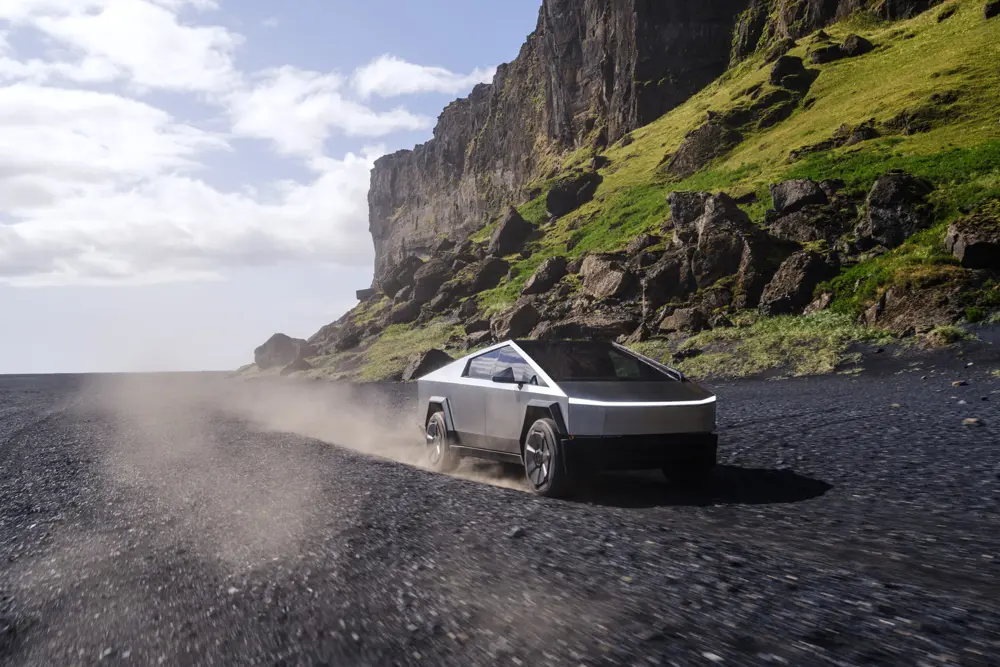
The military’s interest in electric vehicles starts with logistics. The Department of Defense is one of the largest fuel consumers on the planet, and every gallon of diesel delivered to a forward operating base costs far more than the pump price — it requires convoys, security, and lives put at risk. Reducing fuel dependence is not just an environmental goal; it is a tactical imperative. An electric vehicle charged from a base’s solar array or tactical microgrid eliminates the most vulnerable link in the supply chain.
Electric drivetrains also offer genuine battlefield advantages. They are quieter than diesel engines — a meaningful edge for reconnaissance and stealth movement. They produce enormous instant torque, useful for hauling heavy loads. They have far fewer moving parts, which means less maintenance in austere conditions where mechanics and spare parts are scarce. And they can export power: an EV’s battery can run communications gear, medical equipment, or command posts silently, replacing noisy diesel generators.
The Pentagon Big Tech Tesla Cybertruck conversation sits at the intersection of these operational needs and a political push. Successive administrations have directed the military to electrify its non-tactical vehicle fleet, and the Army has published climate and electrification strategies envisioning hybrid and electric tactical vehicles. Testing commercial platforms like the Cybertruck is the fastest way to learn what works before committing to purpose-built military EVs.
Pentagon Big Tech Tesla Cybertruck: What the Cybertruck Brings to the Table
Strip away the hype and the memes, and the Tesla Cybertruck has several attributes that legitimately interest military evaluators. The first is its stainless steel exoskeleton. The cold-rolled steel body panels are far more dent- and damage-resistant than conventional automotive sheet metal — Tesla has demonstrated this with everything from sledgehammers to, reportedly, small-arms fire tests. For a vehicle operating in rough environments, a body that shrugs off abuse has obvious appeal.
The second is the 48-volt electrical architecture and steer-by-wire system, which represent a generational leap in vehicle electronics. Military vehicles are becoming sensor and communications platforms as much as transport, and a modern high-voltage electrical backbone makes integration easier. The Cybertruck’s large battery pack — among the biggest in any production EV — provides the energy reserve that military applications demand.
Third is manufacturing scale and cost. Traditional military vehicles are built in small numbers at enormous per-unit cost. A commercial platform produced at automotive scale could, in theory, deliver capability at a fraction of the price — even if modified for military use. The Pentagon has learned from Ukraine that cheap, numerous, and replaceable often beats exquisite and rare.
None of this means the Cybertruck is ready for combat as-is. Military evaluators are clear-eyed about the gaps: repairability in the field, electromagnetic hardening, parts commonality with existing fleets, and the sheer weight of the vehicle are all concerns. But as a testbed for understanding electric truck capabilities, it offers data no laboratory can provide.
Pentagon Big Tech Tesla Cybertruck: Big Tech’s Deepening Role in Defense
The Cybertruck is only one thread in the larger Pentagon Big Tech Tesla Cybertruck story. The more consequential shift is structural: the Pentagon is deliberately courting Silicon Valley, and big tech is answering.
Microsoft’s IVAS program — augmented-reality headsets for soldiers based on HoloLens technology — showed both the promise and the friction of this partnership, with the Army pushing Microsoft through rounds of soldier feedback and redesigns. Google, Amazon, and Microsoft competed fiercely for the JEDI and follow-on JWCC cloud contracts worth billions, bringing hyperscale cloud infrastructure to military operations. Oracle and others joined the mix.
Palantir, founded with PayPal money and Silicon Valley DNA, has become one of the Pentagon’s most important software vendors, providing data integration and AI-driven decision tools used from headquarters planning to battlefield targeting. Anduril, founded by Oculus creator Palmer Luckey, builds AI-powered drones, sentry towers, and counter-drone systems — explicitly positioning itself as the SpaceX-style disruptor of traditional defense primes.
Even SpaceX is now a defense stalwart: Starlink terminals became critical communications infrastructure in Ukraine, and the company’s Starshield offering formalizes its military role. The pattern is unmistakable — the technologies reshaping civilian life are being adapted for defense faster than at any point since the Cold War’s early days.
Pentagon Big Tech Tesla Cybertruck: What Military Testing of Commercial EVs Has Shown So Far
Reports of military interest in the Cybertruck specifically have circulated since its unveiling, with various outlets describing evaluations, purchases for testing, and even modified concepts. The details matter less than the pattern: the services are buying or borrowing commercial EVs — Teslas, Rivians, GMs, Fords — and putting them through their paces to build an evidence base.
What the testing reportedly shows is a mix of promise and hard limits. On the promise side: the torque, quiet operation, and low maintenance burden all check out. Base transport, flight-line support, and administrative fleets are natural fits — the military operates tens of thousands of such vehicles, and electrifying them is straightforward. Several bases have already begun transitioning non-tactical fleets to electric.
The hard limits appear in the tactical domain. Range under load, charging infrastructure in expeditionary settings, battery vulnerability to damage, and the weight penalty of armoring an already-heavy EV are serious obstacles. A Cybertruck that weighs over three tons before adding military equipment strains transport aircraft limits and bridge classifications. These are solvable engineering problems, but they are not solved yet.
The honest assessment from defense analysts is that commercial EVs will transform military support fleets long before they transform combat fleets. That is still a big deal — the support tail is where most of the fuel, money, and maintenance hours go. Electrifying the tail changes the economics of the entire force.
Pentagon Big Tech Tesla Cybertruck: Criticisms and Concerns Worth Taking Seriously
The Pentagon Big Tech Tesla Cybertruck enthusiasm has no shortage of critics, and their arguments deserve a fair hearing. The most pointed criticism is about priorities: with readiness challenges, aging equipment, and near-peer competition from China, skeptics ask whether EV experimentation is a distraction from more urgent needs. Every dollar and engineering hour spent on electric trucks is one not spent on munitions, ships, or aircraft.
Cybersecurity is another serious concern. Modern EVs are computers on wheels, packed with sensors, connectivity, and over-the-air update capability. In military service, every one of those is an attack surface. A vehicle that phones home to a commercial cloud is a counterintelligence problem as well as a convenience. Hardening commercial tech for military networks is expensive and never fully complete.
Supply chain dependence worries strategists too. EV batteries depend on minerals — lithium, cobalt, nickel, graphite — whose processing is dominated by China. Trading dependence on Middle Eastern oil for dependence on Chinese battery supply chains is, to critics, jumping from one vulnerability to another. Domestic battery production is growing but remains far from self-sufficiency.
There are also cultural frictions. The military’s relationship with big tech has been rocky — employee protests at Google over Project Maven, Amazon’s JEDI legal battle, and ongoing debates about AI in weapons systems all show that Silicon Valley and the Pentagon do not always want the same things. Partnerships that look smooth in press releases can be turbulent in practice.
Pentagon Big Tech Tesla Cybertruck: How Commercial Tech Is Changing Defense Procurement
Beyond any single vehicle, the Pentagon Big Tech Tesla Cybertruck moment reflects a procurement revolution. The traditional model — decade-long development programs producing bespoke platforms at staggering cost — is under pressure from a faster alternative: buy commercial, modify lightly, field quickly, iterate often.
Ukraine has been the brutal proof of concept. Commercial drones, Starlink terminals, and off-the-shelf software have mattered as much as traditional weapons systems, and they arrived in weeks rather than years. Pentagon leadership has absorbed the lesson, creating fast-track acquisition pathways and innovation units like the Defense Innovation Unit (DIU) specifically to pull commercial tech into service.
This shift threatens the traditional defense primes — Lockheed Martin, Raytheon, Boeing, General Dynamics — whose business models depend on long, lucrative development contracts. It empowers newcomers like Anduril and Palantir, and it opens the door for automotive and tech companies that never considered themselves defense contractors. The industrial base of American defense is being redrawn.
For taxpayers, the promise is more capability per dollar and faster delivery. The risk is that commercial tech, optimized for consumer markets, fails under military stresses that no product review ever tested. The Pentagon’s EV evaluations — Cybertruck included — are essentially experiments in finding where that line sits.
What Comes Next for Military EVs
The trajectory points toward steady, unspectacular progress rather than sudden transformation. Expect the non-tactical fleet — the cars, vans, and trucks used on bases every day — to electrify first and fastest, driven by federal mandates and simple economics. Several manufacturers are already competing for these contracts with modified commercial EVs.
For tactical vehicles, the path runs through hybrids. The Army’s stated approach envisions hybrid-electric tactical trucks as the bridge: electric drive for silent movement and export power, with a combustion engine for range extension and rapid refueling. Pure-electric tactical vehicles will follow only when battery energy density and expeditionary charging mature — likely a decade-scale timeline.
Watch the Army’s Common Tactical Truck and similar programs for signals. If requirements documents start specifying electric drive, export power capacity, and silent-watch endurance, the commercial EV experiments will have done their job — shaping the specifications of the next generation of military vehicles.
And watch the tech partnerships. The deeper big tech embeds in defense — cloud, AI, autonomy, space — the more natural it becomes for commercial platforms to cross over. The Cybertruck may or may not have a military future, but the pipeline that brought it to the Pentagon’s attention is now permanent infrastructure.
Frequently Asked Questions
Is the Pentagon actually buying Tesla Cybertrucks?
Various reports have described military evaluations and test purchases of Cybertrucks and other commercial EVs. The services routinely buy commercial vehicles for testing without committing to fleet adoption. Evaluation is real; mass procurement is not currently on the table. The broader Pentagon Big Tech Tesla Cybertruck discussion is really about the testing pipeline itself — learning what commercial electric platforms can and cannot do for the force.
Why would the military want electric vehicles?
The main reasons are logistical and tactical: reducing vulnerable fuel convoys, enabling silent movement, cutting maintenance, and using vehicle batteries to power equipment. For base and support fleets, the economics already favor electric in many cases.
What does big tech have to do with the Pentagon?
Big tech provides the cloud infrastructure, AI software, satellite communications, and increasingly the hardware platforms the modern military runs on. Companies like Microsoft, Amazon, Google, Palantir, Anduril, and SpaceX all hold major defense contracts, making Silicon Valley a core part of the defense industrial base.
Could a Cybertruck survive combat?
A stock Cybertruck is not a combat vehicle — it lacks armor integration, electromagnetic hardening, and military communications. Its stainless body resists small damage well, but real combat protection requires purpose-built armor. Military interest focuses on support roles and technology evaluation, not front-line fighting.
Will military EVs replace diesel trucks?
Eventually in many roles, but not soon across the board. Support and administrative fleets will electrify first; tactical combat vehicles will likely go hybrid before going fully electric. The transition will take a decade or more and depends on battery technology advances.
The Economics of Military Electrification
The financial case for the Pentagon Big Tech Tesla Cybertruck experiments rests on total cost of ownership, not sticker price. Electric vehicles cost more upfront but far less to operate: electricity is cheaper than diesel per mile, electric motors need a fraction of the maintenance, and brake wear drops dramatically thanks to regenerative braking. Over a vehicle’s service life, those savings compound.
The fully burdened cost of fuel sharpens the math. Studies have estimated that delivering fuel to remote bases can cost anywhere from tens to hundreds of dollars per gallon once transport, security, and infrastructure are counted. Every mile driven on electricity generated locally — from solar arrays, tactical microgrids, or base power — avoids that entire logistics chain. For a military that burns billions of gallons annually, even partial electrification represents enormous savings.
There is also the industrial policy angle. Federal fleet electrification creates guaranteed demand that helps American battery and EV manufacturers scale up, driving down costs for everyone. The Pentagon has historically played this role — its early purchases of semiconductors, GPS equipment, and jet engines seeded industries that later transformed the civilian economy. Military EV adoption could do the same for the American battery supply chain.
Critics counter that the math only works if charging infrastructure is built, and that infrastructure is itself expensive — particularly expeditionary charging that must be transportable, rugged, and secure. Both sides agree on one thing: the economic argument will be settled by real-world data, which is exactly what the current round of evaluations is designed to produce.
When you’re getting started with Pentagon Big Tech Tesla Cybertruck, the biggest mistake is trying to do everything at once. The people who get the best results from Pentagon Big Tech Tesla Cybertruck start small, focus on one specific goal, and build from there. Think of Pentagon Big Tech Tesla Cybertruck as a skill you develop over time, not a switch you flip. Each week you spend working with Pentagon Big Tech Tesla Cybertruck, you’ll notice patterns in what works and what doesn’t.
Not every approach to Pentagon Big Tech Tesla Cybertruck is right for every person. Your budget, your experience level, and your end goal all shape which Pentagon Big Tech Tesla Cybertruck strategy makes sense for you. Someone exploring Pentagon Big Tech Tesla Cybertruck for the first time needs different guidance than someone who’s been using Pentagon Big Tech Tesla Cybertruck for months. The advice below assumes you’re past the absolute basics but still figuring out the details.
Global Competition: What Rivals Are Doing
The United States is not alone in exploring military electrification. China, the world’s dominant EV and battery producer, has obvious advantages: its civilian EV industry is the largest on earth, its battery supply chains are domestic, and the People’s Liberation Army has reportedly tested electric and hybrid vehicles for logistics roles. In a potential conflict, China’s ability to field electric military vehicles at scale could outpace America’s.
European militaries are moving too. Several NATO members have published electrification roadmaps for non-tactical fleets, and European defense firms are developing hybrid armored vehicles. The UK, France, and Germany all have programs exploring electric drive for future combat vehicles, motivated by the same logistics and stealth advantages driving American interest.
This competitive dimension reframes the Pentagon Big Tech Tesla Cybertruck story as an arms race in energy technology. The nation that masters military electrification first gains advantages in logistics resilience, operational stealth, and industrial capacity. Falling behind means fighting future conflicts with a more vulnerable, more expensive fuel-dependent force.
The race also extends to the underlying technologies big tech provides: AI for autonomous resupply convoys, satellite networks for beyond-line-of-sight control of unmanned vehicles, and cloud infrastructure for processing battlefield sensor data. Electric vehicles are the visible tip of a much larger military-technology transformation, and the competition spans every layer of it.
For American planners, the lesson is urgency without recklessness: move fast enough to lead, but test rigorously enough to avoid fielding technology that fails when lives depend on it. The Cybertruck evaluations and the broader big-tech defense partnerships are how the Pentagon is trying to strike that balance — learning in public, iterating quickly, and building the evidence base for the electrified force of the 2030s.