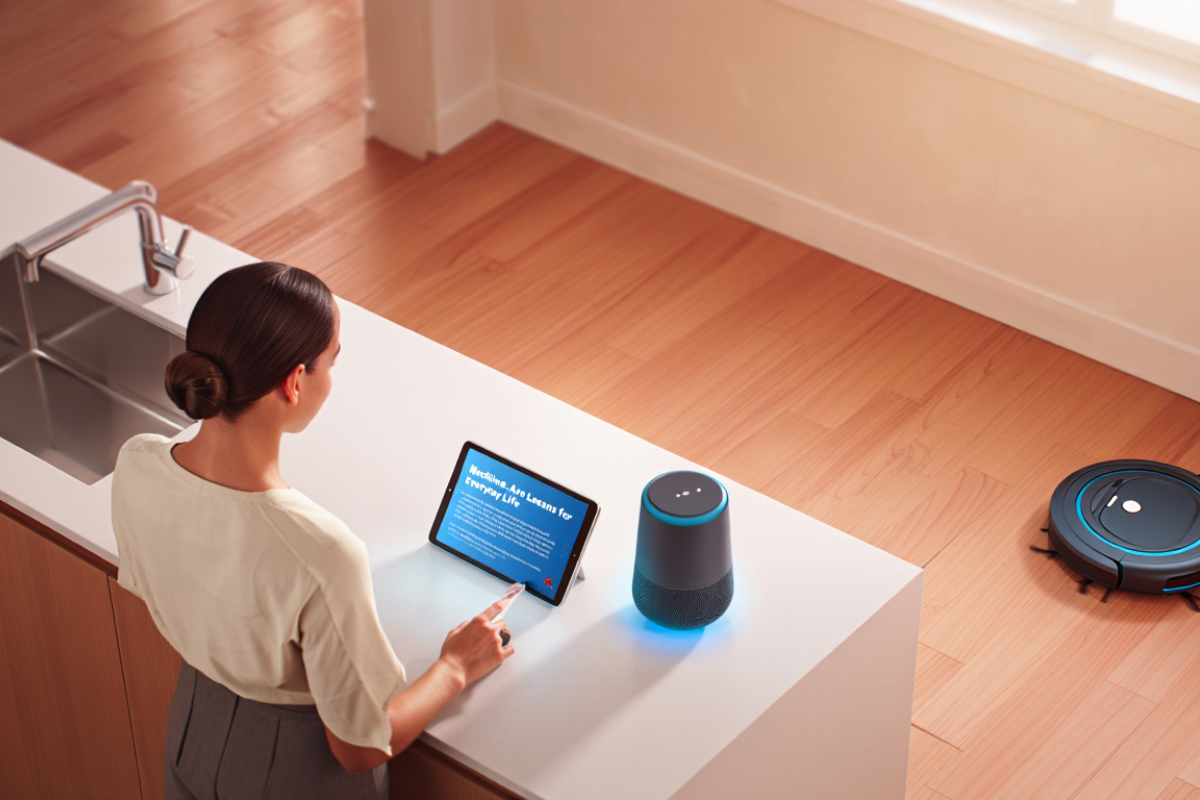
Machines Are Learning, and Your Life Is Already Changing
You might not think about it much, but machines are learning all around you, right now. When Netflix suggests a show you end up loving, when your phone’s keyboard predicts your next word with eerie accuracy, when your email automatically filters spam, that’s machine learning at work. It’s not science fiction. It’s not coming someday. It’s here, woven into the fabric of your daily routine in ways you probably don’t even notice.
The phrase “machines are learning” sounds dramatic, almost ominous. But the reality is more practical and, frankly, more interesting. Machine learning is a technology that allows computers to improve at tasks through experience rather than explicit programming. Instead of a human writing every rule, the machine analyzes data, finds patterns, and gets better over time.
I want to demystify this for you. Not the math or the algorithms, but what it actually means for your everyday life. How it’s already helping you, where it’s causing problems, and what’s likely to change in the next few years. By the end, you’ll have a clear, grounded understanding of one of the most important technological shifts of our time.
What Does It Mean When We Say Machines Are Learning?
Let’s start with a simple analogy. Imagine teaching a child to recognize dogs. You wouldn’t give them a list of rules about snout shapes and ear positions. You’d show them lots of pictures of dogs, point and say “dog,” and eventually they’d figure it out. They’d even recognize breeds they’d never seen before because they’d learned the general concept.
Machine learning works similarly. Instead of programming explicit rules, developers feed the system massive amounts of data and let it discover patterns on its own. Show a machine learning system millions of images labeled “cat” or “not cat,” and it learns to identify cats in new images it’s never seen. The more data it processes, the better it gets.
This is fundamentally different from traditional software. A traditional spam filter follows rules written by humans: if an email contains certain words, mark it as spam. A machine learning spam filter learns from millions of examples of spam and legitimate email, discovering subtle patterns that humans might never think to encode as rules. That’s why modern spam filters are so much more effective than the old ones.
The “learning” isn’t conscious or intentional. The machine doesn’t understand what a cat is in any meaningful sense. It’s performing sophisticated statistical analysis, finding correlations in data that allow it to make accurate predictions about new, unseen examples. But the practical effect is remarkable. Systems that learn from data can handle tasks that would be impossible to program with explicit rules.
Where Machines Are Learning in Your Daily Life Right Now
You interact with machine learning systems dozens of times a day. Most of these interactions are so seamless that you don’t think of them as AI at all. Let’s make the invisible visible.
Machines Are Learning: Your Smartphone Is Full of Learning Machines
Every time you unlock your phone with your face, machines are learning at work. The facial recognition system had to learn what your face looks like from different angles, in different lighting, with and without glasses. It continues to adapt as your appearance changes over time.
Your keyboard’s autocorrect and predictive text are constantly learning from how you type. They adapt to your vocabulary, your slang, the names of people you message frequently. This is why your phone seems to know what you’re going to say. It’s learned your patterns.
Voice assistants like Siri and Google Assistant use machine learning for speech recognition, understanding your intent, and generating responses. They’ve gotten dramatically better over the years because they’ve learned from billions of interactions. Your specific assistant also adapts to your voice and your common requests.
Even your camera is packed with machine learning. When it automatically adjusts for lighting, identifies faces to focus on, or suggests the best shot from a burst, that’s learned behavior. The portrait mode that blurs the background while keeping you sharp? That’s a machine learning model that learned to distinguish people from backgrounds.
Machines Are Learning: Entertainment and Content You Consume
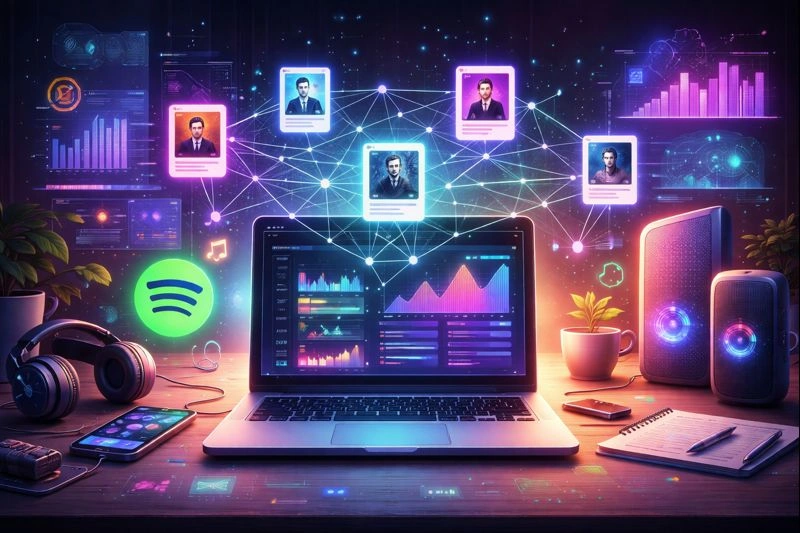
Streaming services are perhaps the most visible example of machines learning in everyday life. Netflix, Spotify, YouTube, and TikTok all use sophisticated recommendation systems that learn your preferences from your behavior. Every show you watch, every song you skip, every video you linger on teaches the system more about what you like.
These recommendations shape your cultural experience in profound ways. The content you’re exposed to, the music you discover, the videos that fill your feed, all of this is curated by learning machines. This personalization is convenient, but it also means that two people can have radically different experiences of the same platform.
Social media feeds are entirely governed by machine learning. The algorithm decides what you see and in what order, optimizing for engagement based on what it’s learned about your behavior. This is why your feed feels personalized. It is, but the personalization is driven by predictions about what will keep you scrolling, not necessarily what’s most valuable or informative.
Machines Are Learning: Shopping, Navigation, and Daily Decisions
When you shop online, machines are learning from your behavior to show you products you’re likely to buy. Amazon’s recommendation engine, targeted ads, and dynamic pricing all rely on machine learning. The price you see for a flight or a product might be different from what someone else sees, based on what the system has learned about demand patterns and your shopping history.
Navigation apps like Google Maps use machine learning to predict traffic, estimate arrival times, and suggest routes. The system learns from the collective movement of millions of users, identifying patterns that help everyone navigate more efficiently. When it reroutes you around a traffic jam you can’t see yet, that’s learned intelligence in action.
Even your bank uses machine learning to protect you. Fraud detection systems learn what your normal spending patterns look like and flag unusual activity. When you get a text asking if a purchase was really you, that’s a learning machine doing its job. These systems have become remarkably good at catching fraud while minimizing false alarms.
How Machines Are Learning Is Changing Work
Beyond consumer applications, machine learning is reshaping how work gets done across virtually every industry. This is where the implications get more serious and more interesting.
In healthcare, machine learning systems help doctors analyze medical images, predict patient risks, and identify potential drug interactions. These systems don’t replace doctors, but they augment their capabilities, catching things that human eyes might miss and processing information at a scale humans can’t match. The result is faster, more accurate diagnoses for many conditions.
In agriculture, farmers use machine learning to predict crop yields, detect plant diseases from drone imagery, and optimize irrigation. This isn’t just about efficiency. It’s about feeding a growing population with limited resources. The farms of the future will be managed with data-driven precision that was unimaginable a generation ago.
In creative fields, the impact is more controversial. Machine learning can now generate images, write text, compose music, and edit video. This has sparked intense debate about the role of human creativity. But the most productive view is that these are tools that extend human capability, not replacements for human vision. The artists and writers who learn to collaborate with these systems are producing work that neither could create alone.
Customer service has been transformed by chatbots and automated systems that can handle routine inquiries. This is a mixed blessing. Simple questions get answered instantly at any hour, but complex problems still frustrate customers who can’t reach a human. The best implementations use machines to handle the routine and humans for the nuanced, which is a pattern we’ll see repeated across many industries.
The Challenges We Need to Talk About
It would be dishonest to discuss how machines are learning without addressing the real concerns. This technology brings genuine challenges that we need to grapple with as a society.
Bias in, Bias Out
Machine learning systems learn from data, and data reflects the biases of the world it comes from. If a hiring system is trained on historical hiring data from a company that discriminated against certain groups, it will learn to replicate that discrimination. This isn’t a hypothetical problem. It’s happened repeatedly in hiring, lending, criminal justice, and other high-stakes domains.
Addressing this requires deliberate effort. Developers need to audit their training data, test for biased outcomes, and implement corrections. But it’s an ongoing challenge because bias can be subtle and deeply embedded in data. The fact that machines are learning from our history means they can also learn our worst patterns unless we’re vigilant.
Privacy in an Age of Learning Machines
Machine learning thrives on data, and the most valuable data is personal. Every interaction you have with these systems generates information that can be used to train better models. This creates a fundamental tension between the benefits of personalization and the right to privacy.
Your location history helps navigation apps work better. Your viewing history improves recommendations. Your messages train language models. Each of these involves a trade-off that most of us accept without much thought because the benefits are immediate and the privacy costs are abstract.
As these systems are advancing more about us, we need better frameworks for consent, data ownership, and the right to be forgotten. The technology is moving faster than the regulations, which means individuals need to be more thoughtful about what they share and with whom.
The Employment Question
Perhaps the most discussed concern is what happens to jobs as machines learn to do more tasks. The honest answer is complicated. Some jobs will be eliminated. New jobs will be created. Many jobs will be transformed, with machines handling certain aspects while humans focus on others.
Historical precedent suggests that technological revolutions ultimately create more jobs than they destroy, but the transition can be painful for individuals and communities. The key variable is how quickly we adapt our education, training, and social safety nets to the changing landscape.
What’s different this time is the breadth of tasks that intelligent systems are evolving to perform. Previous automation waves primarily affected manual labor. Machine learning is now affecting cognitive work: writing, analysis, design, even aspects of medicine and law. This means the adaptation required is broader and potentially more challenging.
What Machines Are Learning Means for Your Future
So what should you actually do with this understanding? How do you prepare for a world where machines are learning at an accelerating pace?
First, develop skills that complement rather than compete with machine learning. Machines excel at pattern recognition, data processing, and optimization. Humans excel at creativity, empathy, ethical judgment, and understanding context. The most valuable workers in the coming decades will be those who can collaborate effectively with intelligent systems, bringing human judgment to machine-generated insights.
Second, become a critical consumer of AI-driven experiences. Understand that your feed is curated, your recommendations are predicted, and your search results are personalized. This awareness helps you seek out diverse perspectives and avoid the trap of algorithmic filter bubbles. Actively look for information outside what the algorithms serve you.
Third, don’t be intimidated by the technology. You don’t need to understand the mathematics to benefit from machine learning or to have informed opinions about its use. Focus on understanding what these systems can and can’t do, where they’re being applied, and what the implications are. That level of literacy is enough to navigate the changes ahead thoughtfully.
Finally, stay curious. The field is evolving rapidly, and today’s limitations may be tomorrow’s capabilities. The people who thrive will be those who keep learning, stay adaptable, and approach new developments with both enthusiasm and healthy skepticism.
Living Thoughtfully with Learning Machines
The fact that AI is getting smarter isn’t inherently good or bad. It’s a tool, and like all powerful tools, its impact depends on how we choose to use it. The same technology that recommends your next favorite song can also reinforce harmful biases. The same systems that help doctors save lives can also enable invasive surveillance.
What gives me optimism is that we’re having these conversations now, while the technology is still developing. We’re asking the right questions about bias, privacy, employment, and control. The answers aren’t simple, but the fact that we’re engaging with them seriously suggests we’ll navigate this transition more thoughtfully than we have with previous technological shifts.
For your everyday life, the practical takeaway is this: AI systems are advancing, and they’re going to keep learning. They’ll get better at helping you, and they’ll also become more deeply embedded in decisions that affect you. Your job isn’t to become a machine learning expert. It’s to stay informed, stay critical, and stay human. Use these tools where they help. Question them where they don’t. And remember that the most important intelligence in the equation is still yours.
The next time Netflix nails a recommendation or your phone predicts your text perfectly, take a moment to appreciate what’s happening. You’re witnessing machines learning in real time, getting a little bit smarter with every interaction. It’s remarkable, it’s consequential, and it’s just the beginning. How we shape this technology, and how we let it shape us, is one of the defining challenges and opportunities of our time.
When you’re getting started with Machines Are Learning, the biggest mistake is trying to do everything at once. The people who get the best results from Machines Are Learning start small, focus on one specific goal, and build from there. Think of Machines Are Learning as a skill you develop over time, not a switch you flip. Each week you spend working with Machines Are Learning, you’ll notice patterns in what works and what doesn’t.
Not every approach to Machines Are Learning is right for every person. Your budget, your experience level, and your end goal all shape which Machines Are Learning strategy makes sense for you. Someone exploring Machines Are Learning for the first time needs different guidance than someone who’s been using Machines Are Learning for months. The advice below assumes you’re past the absolute basics but still figuring out the details.
The real payoff from Machines Are Learning comes from consistency, not perfection. You don’t need the most expensive tools or the most advanced setup to benefit from Machines Are Learning. What matters is showing up regularly, paying attention to results, and adjusting as you learn. Most people overthink Machines Are Learning at the start and underthink it later.
Frequently Asked Questions About Machine Learning
Let’s address some common questions about what it means that these intelligent systems. These come up frequently when people start thinking seriously about AI’s role in their lives.
Should I be worried that AI is getting smarter? Worry isn’t productive, but awareness is. The technology itself is neutral. What matters is how it’s designed, deployed, and regulated. Stay informed about how machine learning is used in areas that affect you, from hiring to lending to content moderation. Support policies that promote transparency and fairness. The goal isn’t to fear the technology but to ensure it develops in ways that benefit everyone.
How can I learn more about machine learning without a technical background? Start with the conceptual understanding, not the math. There are excellent books, documentaries, and online courses designed for non-technical audiences. Focus on understanding what the technology can do, where it’s being applied, and what the implications are. You don’t need to know how to build a neural network to have informed opinions about how machine learning should be used in society.
Will machines ever truly think like humans? This is a deep philosophical question that experts disagree on. Current machine learning systems, impressive as they are, don’t think in any meaningful sense. They recognize patterns and make predictions. Whether they’ll ever develop genuine understanding or consciousness is unknown. What’s clear is that they’re becoming more capable at specific tasks, and that trend will continue. The practical implications matter more than the philosophical ones for most people’s daily lives.
What’s the single most important thing to understand about machine learning? That it’s a tool shaped by human choices. The data we use to train systems, the objectives we optimize for, the safeguards we implement, these are all human decisions. The future of machine learning isn’t predetermined by the technology. It’s determined by the choices we make about how to develop and deploy it. That means your voice matters in shaping what comes next.