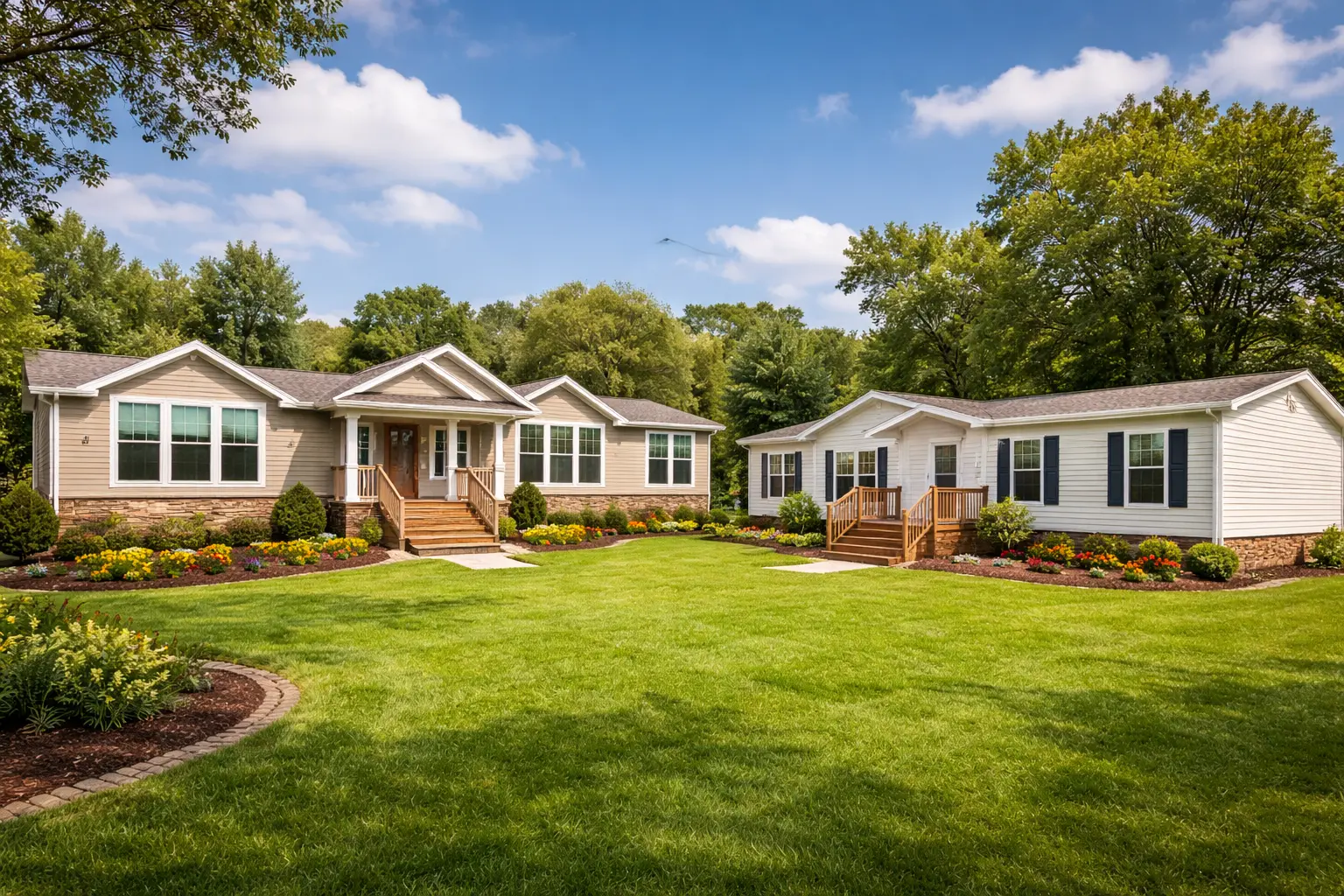
If you are shopping for a manufactured home and keep running into the term triple wide mobile homes, you are not alone in wondering what exactly you get for the extra money. Triple wide mobile homes are the largest factory-built homes on the market, assembled from three separate sections joined together on your lot. They promise something close to a site-built house — spacious bedrooms, real dining rooms, sprawling kitchens — at a fraction of conventional construction cost. But they also come with bigger price tags, trickier installations, and fewer available lots.
Double wides, built from two sections, have been the sweet spot for decades: roomy enough for families, affordable, and easy to place on most lots. So which is actually better for you? The answer depends on your budget, your land, your family size, and how long you plan to stay. This guide breaks down triple wide mobile homes versus double wides on every factor that matters — size, cost, installation, financing, and resale — so you can decide with confidence.
What Are Triple Wide Mobile Homes?
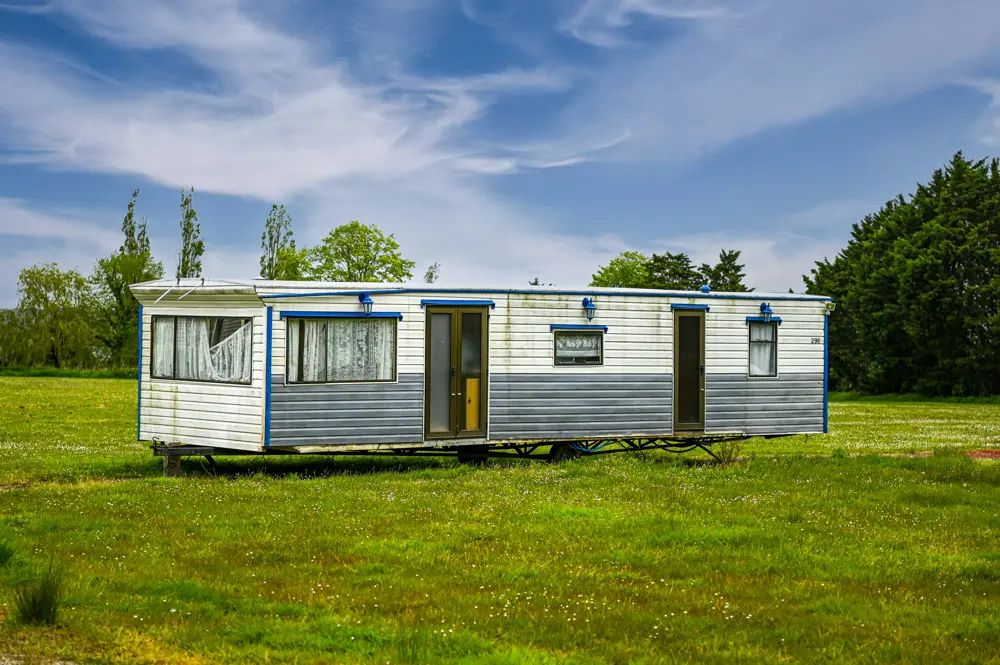
Triple wide mobile homes are manufactured homes built in three sections at the factory, transported separately to your site, and joined together on a permanent foundation. Each section is typically 14 to 16 feet wide, so the finished home spans 42 to 48 feet in width, with lengths running 60 to 80 feet. That works out to 2,000 to 3,000+ square feet of living space — firmly in the territory of a conventional suburban house.
What surprises first-time buyers is how little these feel like “mobile” homes. Modern triple wides have 9-foot ceilings, drywall interiors, real wood cabinets, walk-in closets, master suites with soaking tubs, and kitchens with islands that would look at home in any new subdivision. The “trailer” stereotype comes from the single-wides of the 1970s; a 2026 triple wide has more in common with a new tract home than with its ancestors.
Construction happens indoors on an assembly line, which means no weather delays and tight quality control. The home is built to the federal HUD code, inspected at the factory, and then finished on-site after the sections are joined. From the street, a well-installed triple wide on a permanent foundation with a garage and landscaping is often indistinguishable from a site-built home.
Triple Wide Mobile Homes vs Double Wide: Size and Layout Compared
Size is the most obvious difference, and it is significant. A typical double wide runs 24 to 32 feet wide and 44 to 80 feet long, giving you roughly 1,000 to 2,300 square feet. A triple wide starts where the biggest double wides end and keeps going. That extra section — usually 14+ feet of width across the full length of the home — adds 800 to 1,000 square feet.
In practical terms, that third section buys you things double wides struggle to fit: a true formal dining room separate from the kitchen, a fourth or fifth bedroom, a dedicated home office, a larger laundry room, or a sprawling great room. Families who work from home, homeschool, or host frequent guests feel the difference daily. Hallways are wider, rooms feel less boxy, and there is simply more breathing room.
Layout flexibility is another advantage of going triple wide. With three sections to work with, manufacturers offer floor plans with split-bedroom designs (master suite on one end, kids’ rooms on the other), dual master suites for multigenerational living, and open-concept great rooms that span the full width. Double wides offer good layouts too, but the extra width unlocks configurations that two sections physically cannot achieve.
That said, bigger is not automatically better. More square footage means more to heat, cool, clean, and maintain. A couple or small family can feel lost — and waste money — in 2,800 square feet. Be honest about how much space you will actually use. An oversized home that sits half-empty is not a smart buy at any price.
Triple Wide Mobile Homes: Cost Comparison: What You Will Actually Pay
Let us talk numbers, because this is where the decision often gets made. In 2026, a new double wide typically costs $90,000 to $180,000 for the home itself, depending on size, brand, and finishes. Triple wide mobile homes generally run $150,000 to $300,000+ for the unit. The per-square-foot cost is actually similar — sometimes the triple wide is cheaper per foot — but the total outlay is much larger.
The home price is only the start. Delivery and installation for a triple wide costs significantly more because you are transporting and craning three sections instead of two. Expect $15,000 to $30,000 for delivery, setup, and finishing work on a triple wide versus $8,000 to $15,000 for a double wide. The marriage walls where sections join need careful sealing and finishing, and there are three times the utility connections to complete.
Site preparation scales with size too. A triple wide needs a larger foundation or pad, more extensive grading, longer utility runs, and bigger driveways and parking areas. If your lot needs clearing or a septic system, those costs rise with the home’s footprint. All in — home, delivery, foundation, utilities, permits, and site work — a triple wide project often lands between $200,000 and $400,000, while a comparable double wide project runs $130,000 to $250,000.
Monthly costs follow the same pattern. Heating and cooling 2,500 square feet costs more than 1,600 square feet, no matter how efficient the build. Insurance premiums are higher for more expensive homes. Property taxes, where manufactured homes on owned land are taxed as real property, scale with assessed value. Budget for the ongoing costs, not just the purchase price.
Pros and Cons of Triple Wide Mobile Homes
Every housing choice is a trade-off. Here is the honest accounting for triple wides.
Advantages. Space is the headline — 2,000+ square feet with residential-feeling rooms. The layouts rival site-built homes, with options for home offices, guest suites, and open living areas. Per-square-foot construction cost is among the lowest in all of housing. Modern triple wides appreciate in value when placed on owned land with a permanent foundation, just like site-built homes. Energy efficiency is strong, since factory construction allows tight envelopes and 2026 models meet strict HUD energy standards.
Disadvantages. The total cost is the big one — you need a substantially larger budget than for a double wide. Installation is more complex and weather-sensitive, with three sections to position and seal. Fewer lots can accommodate the width; many manufactured home communities and subdivisions cap out at double-wide sizes. Financing can be trickier, as fewer lenders handle large manufactured home loans. And if you ever need to move the home, relocating a triple wide is extremely expensive — treat it as permanent.
Where double wides win. Lower total cost, easier installation, far more placement options, simpler financing, and lower ongoing costs. For many buyers, a well-chosen double wide delivers 90% of the living experience at 60% of the cost. The triple wide premium only makes sense if you genuinely need the space.
Triple Wide Mobile Homes: Installation and Site Requirements
Installing a triple wide is a serious construction project. Each of the three sections arrives on its own truck, and a crane lifts them onto the prepared foundation. The sections must be aligned precisely — even small misalignments cause problems with the marriage walls, roof lines, and interior finishes. This is skilled work, and the crew’s experience level matters enormously. Ask your dealer how many triple wides their setup crew has completed.
Your site needs to handle the logistics. The delivery trucks are long, and the crane needs clear access and stable ground. Narrow roads, low bridges, tight turns, overhead wires, and steep grades can all make delivery impossible or wildly expensive. Get a site inspection from the dealer before you commit — reputable dealers do this free because they do not want a stranded home either.
Foundation requirements are stricter for triple wides due to the weight and the structural demands of joining three sections. Most buyers use a permanent concrete foundation or engineered pier system. Local codes vary, and some jurisdictions have specific requirements for homes over a certain width. Your dealer and a local contractor should confirm compliance before the home ships.
Timeline-wise, expect 2 to 4 months from order to move-in for a triple wide, versus 6 to 10 weeks for a double wide. Factory build time is longer, scheduling three-section delivery takes coordination, and the on-site finishing work — sealing marriage walls, completing roofing, connecting utilities across sections — takes days longer than a two-section setup.
Triple Wide Mobile Homes: Resale Value and Financing
Resale is where triple wides often surprise skeptics. A triple wide home on owned land, on a permanent foundation, titled as real property, appreciates much like a site-built home in the same market. Appraisers treat it as a house, not a vehicle. In growing markets, owners have seen solid equity gains. The key conditions are owned land (not a rented lot), permanent foundation, and good maintenance — the same things that drive value for any home.
Triple wides in land-lease communities are a different story. Like all manufactured homes on rented lots, they depreciate or hold flat because the buyer is purchasing a depreciating structure without the appreciating land beneath it. If resale matters to you, owning the land is the single most important decision you will make — more important than double versus triple wide.
Financing a triple wide is very doable but narrower than conventional mortgages. Chattel loans (for the home alone) carry higher rates and shorter terms. Far better is a manufactured home mortgage — FHA, VA, and conventional loans all have programs for manufactured homes on permanent foundations, with rates close to site-built mortgages. You will need a good credit score, the home must meet HUD code (all new ones do), and the foundation must meet permanent standards. Fewer lenders offer these loans than standard mortgages, so shop around and consider lenders who specialize in manufactured housing.
Double wides are slightly easier to finance simply because more lenders are familiar with them and the loan amounts are smaller. But the programs are the same. Do not let financing fears push you to a double wide if a triple wide fits your needs — the loan process is only modestly more involved.
Triple Wide Manufacturers and Brands Worth Knowing
Not all triple wides are built the same, and the manufacturer you choose affects everything from floor plan options to warranty support. A few names dominate the triple wide segment in 2026, each with distinct strengths worth understanding before you visit a dealer.
Clayton Homes, the largest manufactured home builder in America, offers the widest selection of triple wide floor plans, including designs with energy-efficient packages and designer interior collections. Their scale means competitive pricing and a large dealer network, which helps with service after the sale. If you want the most choices and the easiest buying process, start with Clayton.
Champion Homes focuses on customization, letting buyers adjust layouts, finishes, and options more freely than most competitors. Their triple wide models are popular with buyers who have specific needs — a main-floor master for aging parents, a second kitchen for multigenerational living, or a layout tuned for a narrow lot. Expect a longer build time in exchange for the flexibility.
Cavco and Palm Harbor, operating as sister brands, are known for higher-end finishes and regional designs tuned for specific climates — important if you are building in extreme heat, cold, or hurricane zones. Their triple wides often include upgraded insulation packages and wind-zone certifications that cheaper builders charge extra for.
When comparing builders, look beyond the brochure. Ask for the HUD data plate specifications, check the insulation R-values, and ask how the marriage walls are sealed — this is where cheap construction shows up years later as drafts and moisture problems. Visit a model home and open the cabinets, feel the flooring, and flush the toilets. The difference between a well-built triple wide and a cheap one is obvious in person and invisible on paper.
Energy costs deserve a special mention when comparing triple wide mobile homes to smaller options. A larger home uses more energy, but modern triple wides are built tight — 2026 HUD code requires high-efficiency windows, sealed ductwork, and upgraded insulation that older manufactured homes never had. Many buyers add a heat pump or mini-split system, which heats and cools large open layouts far more efficiently than the forced-air furnaces of the past. Ask your dealer for the home’s estimated annual energy cost; reputable manufacturers provide it, and the number is often lower than buyers expect.
Which Should You Choose?
Choose a triple wide if: your family needs 4+ bedrooms or a dedicated office, you own (or are buying) a lot large enough for the footprint, your budget comfortably covers $200,000+ all-in, and you plan to stay put for many years. The space and residential feel are genuinely worth it for the right buyer.
Choose a double wide if: your budget is under $180,000 all-in, your lot is standard-sized, your household is 1–4 people, or you value lower monthly costs. A modern double wide is an excellent home — spacious, efficient, and far more affordable. Most buyers are happier with a well-appointed double wide than a stretched-thin triple wide purchase.
The deciding question is not “which is better” but “which fits my life.” Walk through model homes of both. Bring your furniture measurements. Price out your specific lot, not a generic estimate. And be honest about the next ten years — kids growing, parents aging, remote work continuing. The right size is the one that fits the life you are actually going to live.
Frequently Asked Questions
How big are triple wides?
Triple wides typically offer 2,000 to 3,000+ square feet, measuring 42 to 48 feet wide and 60 to 80 feet long. They are built in three factory sections joined on-site, making them the largest manufactured homes available.
How much do triple wides cost in 2026?
The home itself usually costs $150,000 to $300,000+, with total project costs (delivery, foundation, site work, utilities) often reaching $200,000 to $400,000. Prices vary by region, manufacturer, size, and finish level.
Do triple wides appreciate in value?
Yes, when placed on owned land with a permanent foundation and titled as real property, triple wides generally appreciate like site-built homes. Homes on rented lots in leased-land communities typically do not appreciate.
Can you finance a triple wide mobile home?
Yes. FHA, VA, and conventional manufactured-home mortgages are available for triple wides on permanent foundations, with rates near conventional mortgages. Chattel loans are also available but carry higher rates. Owning the land and using a permanent foundation unlocks the best loan terms.
When you’re getting started with Triple Wide Mobile Homes, the biggest mistake is trying to do everything at once. The people who get the best results from Triple Wide Mobile Homes start small, focus on one specific goal, and build from there. Think of Triple Wide Mobile Homes as a skill you develop over time, not a switch you flip. Each week you spend working with Triple Wide Mobile Homes, you’ll notice patterns in what works and what doesn’t.
Not every approach to Triple Wide Mobile Homes is right for every person. Your budget, your experience level, and your end goal all shape which Triple Wide Mobile Homes strategy makes sense for you. Someone exploring Triple Wide Mobile Homes for the first time needs different guidance than someone who’s been using Triple Wide Mobile Homes for months. The advice below assumes you’re past the absolute basics but still figuring out the details.
The real payoff from Triple Wide Mobile Homes comes from consistency, not perfection. You don’t need the most expensive tools or the most advanced setup to benefit from Triple Wide Mobile Homes. What matters is showing up regularly, paying attention to results, and adjusting as you learn. Most people overthink Triple Wide Mobile Homes at the start and underthink it later.
Final Thoughts
Triple wides deliver something remarkable: site-built-style space and comfort at factory-built prices. They are not right for everyone — the cost, lot requirements, and complexity are real. But for families who need the room and own the land, a triple wide is one of the smartest housing values in America. Compare honestly, budget completely, and choose the size that fits your actual life.