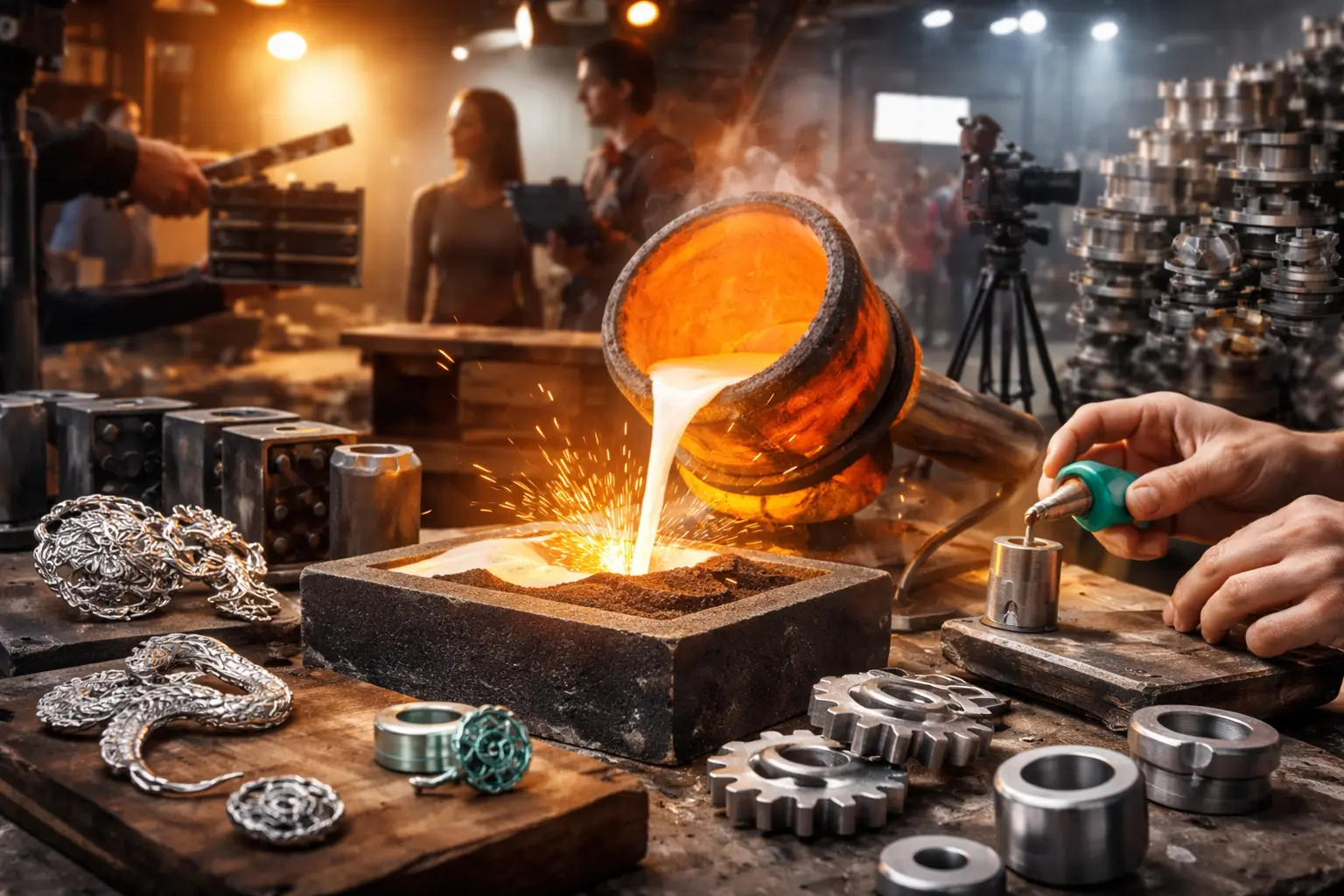
When most people hear “startup,” they picture software, apps, and venture capital. But some of the most profitable small businesses in America involve neither code nor computers — they involve fire, metal, and craftsmanship. A Casting Startup lets you turn raw material worth a few dollars into finished products worth hundreds, using skills that are genuinely rare in today’s economy.
Metal casting is one of humanity’s oldest manufacturing processes, and it is experiencing a quiet renaissance. Hobbyist foundries, artisan metalwork businesses, and small-batch industrial casting shops are thriving by serving markets that mass production cannot — custom parts, artistic pieces, restoration work, and specialized components in small quantities. In this guide, I will walk you through ten profitable ideas you can launch in 2026, most with modest upfront investment and real paths to sustainable income. Each Casting Startup concept below includes realistic startup costs and revenue expectations.
Casting Startup: Why Metal Casting Is a Smart Startup Bet in 2026
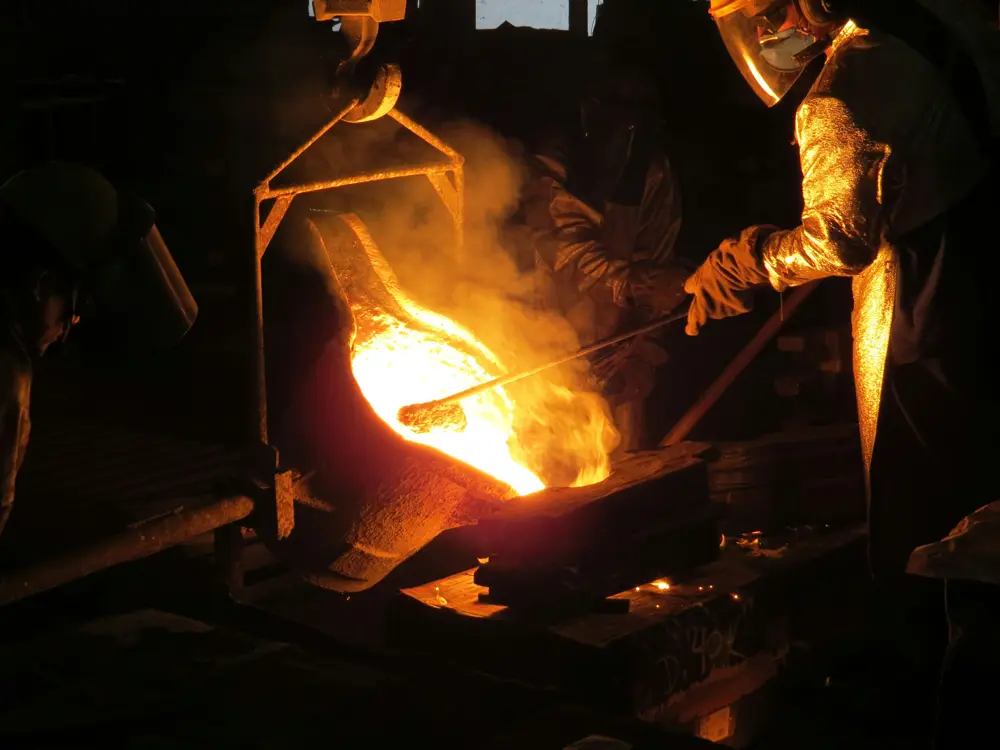
Several trends are converging to make small-scale casting more viable than it has been in decades. Understanding these tailwinds helps explain why a Casting Startup makes sense now and not just as a hobby.
First, the maker movement has created real demand for handcrafted metal goods. Consumers are tired of identical mass-produced items and will pay premium prices for things made by actual humans — custom door handles, artistic sculptures, hand-forged tools, unique jewelry. A small casting operation can serve this market in ways that large factories structurally cannot, because the economics of mass production require volume that artisan markets do not provide.
Second, supply chain disruptions taught businesses the value of local, small-batch manufacturing. Companies that relied on overseas suppliers for custom metal parts got burned by delays and quality issues. Many now prefer domestic small-batch producers even at higher per-unit costs, because reliability and communication matter more than squeezing the last penny. A local casting shop that delivers on time wins repeat business.
Third, the equipment has gotten more accessible. Small electric furnaces, affordable 3D printers for making patterns, and abundant online instruction have lowered the barrier to entry dramatically. What once required an industrial facility can now start in a well-ventilated garage workshop. The knowledge that used to be locked in trade apprenticeships is now on video platforms, free for anyone willing to learn.
Fourth, skilled metalworkers are genuinely scarce. Trade schools produce fewer foundry workers each year, and the existing workforce is aging. This scarcity means less competition and better pricing power for those who develop the skills. When you can do something that few others in your area can do, you set your own rates.
The economics are compelling. Raw aluminum might cost you two dollars per pound. Cast it into a custom part or artistic piece, and that same material can sell for twenty to fifty dollars per pound of finished product. The value multiplier comes from your skill, creativity, and ability to solve specific problems — not from expensive raw materials. That is the hallmark of a healthy small manufacturing business.
Casting Startup: Idea 1: Custom Architectural Hardware
Door handles, cabinet pulls, hinges, switch plates, house numbers — the metal details that make a building feel special. Mass-market hardware comes in a handful of generic styles. Homeowners renovating historic properties, boutique hotels, and high-end builders constantly need pieces that match a specific aesthetic or replace irreplaceable originals. This is where a small foundry focused on architectural hardware finds its niche.
The business model is straightforward. Clients bring you an existing piece to replicate, a design to produce, or a problem to solve (“we need forty cabinet pulls in this exact style, and nobody makes them anymore”). You create a pattern, cast the pieces in bronze, brass, or aluminum, finish them to match, and deliver. Per-piece prices range from twenty dollars for simple pulls to several hundred for elaborate door handles or custom grilles.
Startup costs are moderate. A small furnace capable of melting bronze and brass, basic molding supplies, finishing tools, and a workspace with proper ventilation will run a few thousand dollars. The real investment is in developing your pattern-making and finishing skills, because architectural clients are picky — a slightly rough casting that would be fine for industrial use will get rejected for a visible door handle.
Marketing is relationship-driven. Connect with historic preservation societies, high-end contractors, interior designers, and architects in your area. One good relationship with a restoration contractor can provide steady work for years, because every historic renovation needs custom hardware. An online portfolio with good photography extends your reach to clients willing to ship pieces for replication.
Casting Startup: Idea 2: Artistic Sculpture and Garden Art
Bronze sculpture has been valuable for thousands of years, and the market for original metal art is stronger than ever. An art-focused Casting Startup serves collectors, galleries, municipalities buying public art, and homeowners wanting distinctive garden pieces. The price points are the highest in small-scale casting — a single bronze sculpture can sell for thousands.
You do not need to be a master sculptor to start. Many successful art casters collaborate with sculptors who create the originals in clay or wax but lack foundry capabilities. You provide the technical service of turning their designs into finished bronze or aluminum pieces. This “art foundry” model generates income from casting fees while you develop your own artistic line on the side.
Garden art offers a more accessible entry point. Decorative planters, sculptural birdbaths, ornamental gates, and garden stakes sell well at art fairs, garden centers, and online. These pieces are smaller, less technically demanding than fine sculpture, and appeal to a broad market of homeowners. A distinctive style — nature motifs, geometric designs, rustic finishes — helps you stand out.
The foundry skills transfer directly. If you can cast a clean bronze sculpture, you can cast anything. Many art-focused casters eventually expand into architectural work, custom commissions, and teaching workshops, diversifying their income. Teaching alone can be lucrative — weekend foundry workshops routinely charge several hundred dollars per student.
Casting Startup: Idea 3: Replacement Parts for Vintage Machinery
Here is a niche most people never think about: the world runs on old machines with broken parts that nobody manufactures anymore. Vintage tractors, antique cars, old industrial equipment, classic motorcycles — their owners are desperate for replacement components, and a small foundry that can reproduce obsolete parts has a captive market.
The process typically works like this. A customer brings you a broken part — a gear, a bracket, a housing, a handle. If the part is intact enough, you use it directly to make a mold. If it is broken, you reconstruct the geometry from the pieces, from photographs, or from engineering drawings. Then you cast a replacement in an appropriate alloy, machine critical surfaces, and deliver a part that keeps a valuable machine running.
Pricing reflects the value of the outcome, not the cost of the material. A cast iron gear that costs you fifteen dollars in material might sell for three hundred, because the alternative is scrapping a twenty-thousand-dollar tractor. Customers understand this math and pay gladly. Your skill in reproducing the part accurately is what they are buying.
This business builds on reputation and specialization. Pick a niche — antique tractors, vintage motorcycles, old woodworking machinery — and become the go-to source. Online forums and clubs for each vintage community are full of people asking “where can I find this part?” Be the answer to that question consistently, and the work finds you. Many casters in this space have months-long backlogs.
Casting Startup: Idea 4: Custom Jewelry Casting Service
Fine jewelry casting is a specialized subset of metal casting with its own techniques, equipment, and market — and it is one of the most profitable per-hour applications of casting skills. A small shop offering custom jewelry casting serves independent jewelry designers, small brands, and retail jewelers who need production capacity without investing in their own foundry.
The service model works well because jewelry designers are creatives, not necessarily manufacturers. They design pieces in CAD or carve wax originals, and they need someone to turn those designs into finished gold, silver, or platinum castings reliably and consistently. You charge per piece or per batch, with pricing that reflects the precision required and the value of the materials you are trusted with.
Equipment needs are specific but compact. Jewelry casting typically uses the lost-wax centrifugal or vacuum casting method, which requires a smaller, more precise setup than larger-scale sand casting. A complete starter setup — burnout kiln, casting machine, basic finishing tools — fits in a small workshop and costs less than many people expect. The investment is in learning the tight tolerances that jewelry demands.
Trust is everything in this business because you are handling precious metals. Start with base metals and silver to build skills and reputation, then graduate to gold as clients trust you with higher-value work. Jewelers talk to each other, and a caster known for reliability, good communication, and clean castings will get referrals continuously. This is a relationship business where quality compounds.
Casting Startup: Idea 5: Small-Batch Industrial Components
Not every casting business needs to be artistic or consumer-facing. There is steady, unglamorous, profitable work in producing small batches of industrial components — brackets, housings, prototypes, custom fittings — for local manufacturers, repair shops, and engineering firms. A small shop serving this market competes on responsiveness and flexibility, not price.
The value proposition is simple. Large foundries have minimum order quantities in the hundreds or thousands and lead times measured in months. When a local manufacturer needs fifty custom brackets next week, or an engineer needs ten prototype housings to test a design, the big foundries cannot help. You can. Speed and low minimums are your competitive moat.
Prototyping is particularly lucrative. Engineers and product designers constantly need physical parts to test before committing to production tooling. 3D printing handles plastic prototypes, but metal prototypes usually require casting. A shop that can take a CAD file, 3D print the pattern, cast the part, and deliver within days serves a real and growing need in the product development world.
Building this business requires more technical credibility than artistic casting. Learn to read engineering drawings, understand tolerances, and communicate with engineers in their language. Invest in basic machining capability — a small mill and lathe — because cast parts often need machined surfaces to meet specifications. The combination of casting plus light machining makes you a one-stop shop that customers prefer over coordinating multiple vendors.
Idea 6: Firearm Restoration and Custom Parts
This niche requires careful attention to legal regulations, but for those who navigate them properly, casting for firearm restoration is a specialized and profitable market. Antique and collectible firearms often need parts that have not been manufactured in decades — grip frames, trigger guards, buttplates, decorative fittings. A licensed caster serving collectors and gunsmiths fills a genuine need.
The critical first step is understanding the law. In the United States, casting certain firearm components may require a manufacturer’s license from the ATF, and regulations vary by part type and jurisdiction. Consult a lawyer familiar with firearms law before starting. Many casters in this space focus specifically on non-regulated parts — grips, decorative elements, and restoration components — to operate clearly within the law.
Assuming proper licensing, the market dynamics are favorable. Collectors restoring valuable antique firearms will pay significant sums for correct replacement parts because the alternative — an incomplete or non-original gun — destroys the piece’s value. A properly cast and finished part that matches the original can be worth hundreds of dollars, produced from dollars’ worth of material.
Relationships with gunsmiths are the key distribution channel. Gunsmiths encounter restoration projects regularly and need reliable casting partners. Become the caster that three or four busy gunsmiths trust, and you will have consistent work. Gun shows and collector forums are also effective for building visibility in this community.
Idea 7: Educational Workshops and Foundry Experiences
Here is an idea that monetizes the process itself rather than the products: teach people to cast. The “experience economy” is real — people pay hundreds of dollars for a day of blacksmithing, pottery, or glassblowing. Foundry workshops, where participants pour molten metal and take home something they made, are among the most memorable experiences you can offer. A workshop-based casting business can be profitable from the first workshop.
The model is straightforward. You run half-day or full-day workshops where small groups (six to twelve people) learn basic sand casting, make a mold, watch or participate in the pour, and leave with a finished piece — a bottle opener, a small sculpture, a custom tile. Charge two to three hundred dollars per person. With ten participants, a single Saturday generates two to three thousand dollars in revenue from a process that costs you a fraction of that in materials.
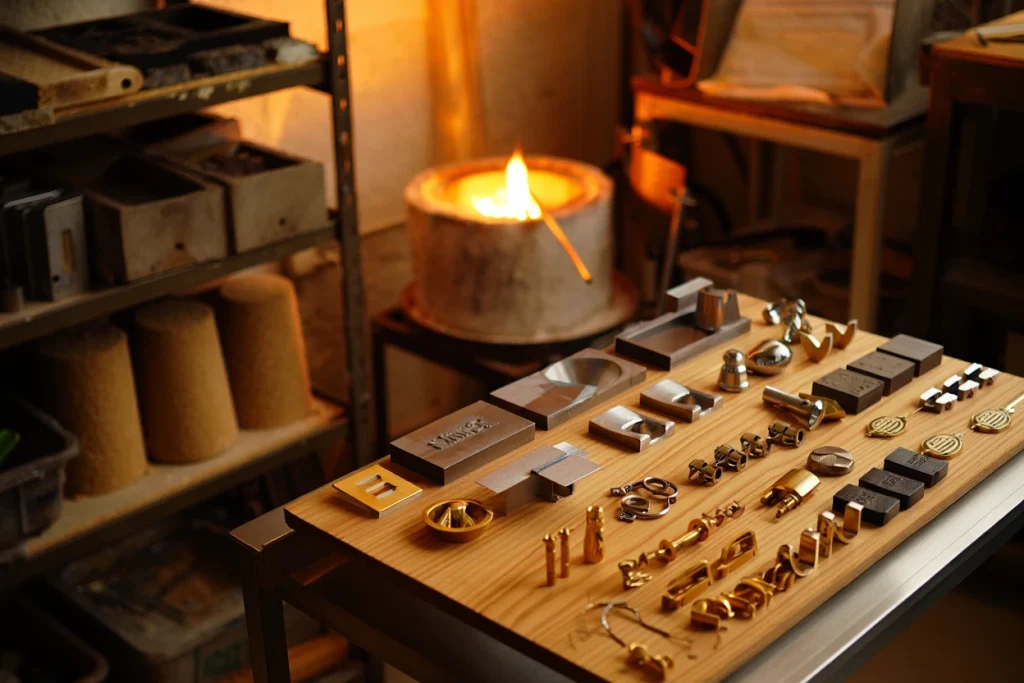
Safety and insurance are the serious considerations. You are working with molten metal around beginners, which demands rigorous safety protocols, proper protective equipment, liability insurance, and ideally a purpose-designed teaching space. This is not a garage operation — it needs to be professional. But the investment in doing it right pays off in premium pricing and corporate team-building bookings, which pay even more.
The marketing practically runs itself. Foundry workshops are inherently photogenic and shareable — participants post videos of the pour all over social media, which is free advertising. Partner with experience gift platforms, list on event marketplaces, and target corporate team-building coordinators. Many workshop businesses report that a large share of bookings come from gift purchases, which means holiday seasons are particularly strong.
Education also feeds your other casting businesses. Workshop participants who fall in love with the craft become customers for your products, refer friends, and sometimes commission custom work. Several successful casters report that their teaching operation became their most profitable line while also serving as a marketing engine for everything else they do.
Idea 8: Custom Awards and Recognition Products
Every industry gives awards, and most awards are generic — glass rectangles, plastic trophies, certificates in frames. A small foundry producing custom cast-metal awards serves corporations, nonprofits, sports leagues, and event organizers who want recognition pieces that actually feel significant. A solid bronze or aluminum award has a weight and presence that cheap trophies cannot match.
The business is project-based and seasonal. Corporate award banquets cluster in certain months, sports seasons end on predictable schedules, and annual conferences need yearly awards. Learn the calendar for your target clients and market ahead of their decision windows. Once you land an annual client — a company that orders fifty custom awards every December — that revenue repeats.
Design flexibility is your selling point. Unlike trophy shops that offer catalog options, you can create literally anything — a client’s logo in bronze, a custom sculpture representing their industry, an award shaped like their product. This customization commands premium pricing: fifty to two hundred dollars per award is typical, with higher prices for larger or more complex pieces.
Startup requirements are modest because awards are small. A compact furnace, molding supplies for small items, and good finishing equipment handle most award work. The bigger investment is in design capability — either your own skills or a relationship with a designer who can translate client ideas into castable designs. Good photography of past work is essential for winning new clients who need to visualize what you can create.
Idea 9: Marine Hardware and Boat Parts
Boat owners are a special breed of customer — passionate, demanding, and willing to pay for quality. The marine environment destroys metal parts through corrosion, and boats, especially older ones, need constant replacement of cleats, hinges, brackets, through-hulls, and decorative fittings. A casting shop near any boating community can build a solid business serving this market.
Bronze is the traditional marine metal for good reason — it resists saltwater corrosion far better than steel or aluminum. Learning to cast marine-grade bronze alloys (silicon bronze, manganese bronze) positions you to produce parts that last decades in harsh conditions. Boat owners understand the value proposition: a quality bronze fitting that costs twice as much but lasts five times longer is the smart buy.
The restoration angle is particularly strong. Classic wooden boats and vintage fiberglass models need period-correct hardware that is no longer manufactured. Owners restoring these vessels — often investing tens of thousands in the project — need casters who can replicate original fittings from samples or drawings. This work commands premium prices because the customers are emotionally and financially invested in authenticity.
Location matters more for this idea than most. Being near marinas, boatyards, and coastal communities gives you natural access to customers and lets you build relationships with marine repair shops. If you are landlocked, you can still serve this market online, but the local connection accelerates trust-building. Consider specializing further — sailboat hardware, classic runabout parts, or commercial fishing vessel components — to become the known expert in a sub-niche.
Idea 10: 3D-Printed Pattern Service for Other Casters
This final idea flips the model: instead of casting for end customers, serve other casters and foundries with the patterns they need. Modern 3D printing produces excellent casting patterns — precise, repeatable, and fast to iterate. Many small foundries have casting expertise but lack 3D design and printing capability. A pattern-making service bridges that gap.
The workflow is digital-first. A client sends you a CAD file, a sketch with dimensions, or a physical object to replicate. You create or refine the 3D model, print the pattern in a castable or mold-making material, and ship it. The client handles the actual foundry work. Your value is in the digital-to-physical translation that many traditional casters struggle with.
This business has the lowest physical requirements of any on this list — no furnace, no molten metal, no foundry ventilation. You need a good 3D printer (or two), CAD software skills, and shipping supplies. It can genuinely start as a home-based business. The investment is in your design skills and printer, not in industrial equipment.
The market includes small foundries, art casters who need precise patterns, engineering firms prototyping cast parts, and hobbyists who want to cast but cannot make patterns. Price per project based on complexity — simple patterns might be fifty dollars, complex multi-part assemblies several hundred. As you build a library of common patterns, you can also sell digital files and standard printed patterns as passive income alongside custom work.
Getting Your Casting Startup Off the Ground
Choosing an idea is just the beginning. Here is practical advice for launching your Casting Startup successfully in 2026.
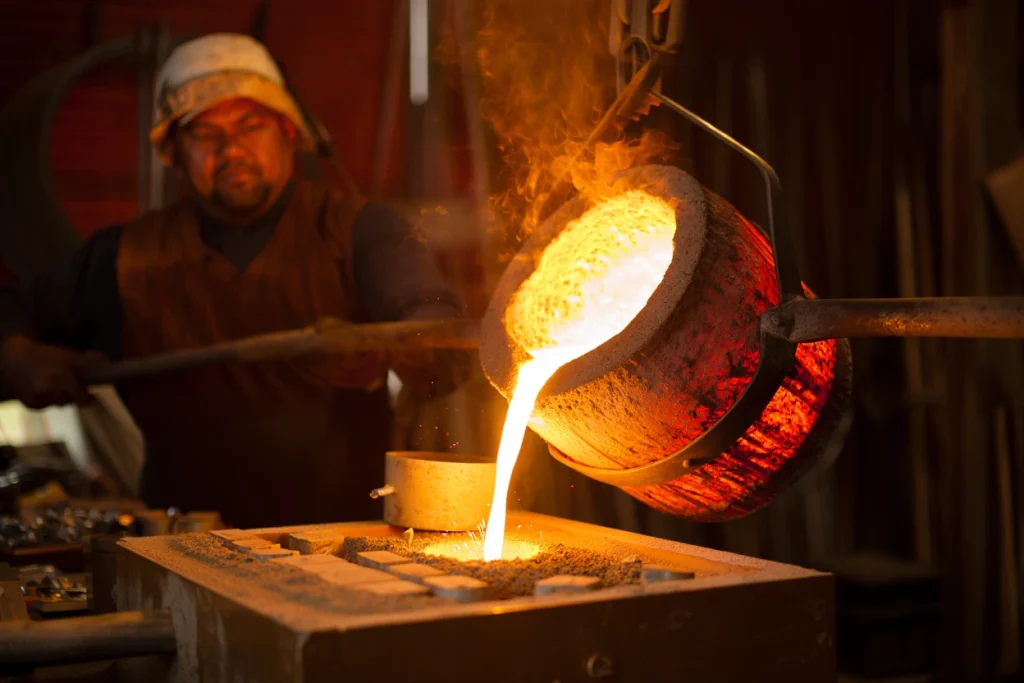
Start with training, not equipment. Before spending thousands on a furnace, take a workshop, volunteer at a local foundry, or complete a comprehensive online course. Casting involves real hazards — molten metal, silica dust, high temperatures — and proper technique matters for both safety and quality. A few hundred dollars in education saves thousands in mistakes and keeps you safe.
Validate demand before scaling. For any of these ideas, start by making samples and showing them to potential customers. Take on three to five paid projects before investing in major equipment upgrades. This proves the market exists, generates testimonials and portfolio pieces, and teaches you what customers actually want versus what you assumed they wanted.
Price for profit from day one. Beginners chronically underprice, calculating material costs but forgetting their time, equipment wear, overhead, and the expertise they are providing. A good rule: total your material costs, estimate your hours honestly, multiply by a target hourly rate (at least thirty to fifty dollars), add overhead, and then add profit margin. If the resulting price seems high, your process needs to be more efficient — do not just eat the difference.
Document everything visually. Casting is visual work, and customers buy with their eyes. Photograph every project — the process shots are as compelling as the finished pieces. Build an online portfolio early, post regularly on visual social platforms, and collect testimonials with photos. In artisan and custom manufacturing, your portfolio is your resume, your advertising, and your credibility all in one.
Join the community. The metal casting world is generous with knowledge — forums, social media groups, local blacksmith and foundry associations, and maker spaces are full of experienced people willing to help beginners. These connections provide technical advice, equipment leads, subcontracting opportunities, and sometimes direct customer referrals. No Casting Startup succeeds in isolation.
When you’re getting started with Casting Startup, the biggest mistake is trying to do everything at once. The people who get the best results from Casting Startup start small, focus on one specific goal, and build from there. Think of Casting Startup as a skill you develop over time, not a switch you flip. Each week you spend working with Casting Startup, you’ll notice patterns in what works and what doesn’t.
Not every approach to Casting Startup is right for every person. Your budget, your experience level, and your end goal all shape which Casting Startup strategy makes sense for you. Someone exploring Casting Startup for the first time needs different guidance than someone who’s been using Casting Startup for months. The advice below assumes you’re past the absolute basics but still figuring out the details.
When you’re getting started with Casting Startup, the biggest mistake is trying to do everything at once. The people who get the best results from Casting Startup start small, focus on one specific goal, and build from there. Think of Casting Startup as a skill you develop over time, not a switch you flip. Each week you spend working with Casting Startup, you’ll notice patterns in what works and what doesn’t.
Not every approach to Casting Startup is right for every person. Your budget, your experience level, and your end goal all shape which Casting Startup strategy makes sense for you. Someone exploring Casting Startup for the first time needs different guidance than someone who’s been using Casting Startup for months. The advice below assumes you’re past the absolute basics but still figuring out the details.
Frequently Asked Questions
How much does it cost to start a Casting Startup?
It depends heavily on which idea you pursue. A pattern-making service can start for under two thousand dollars (3D printer and supplies). A small non-ferrous foundry for art or hardware runs three to eight thousand for furnace, molding equipment, safety gear, and ventilation. A jewelry casting setup is in a similar range. Start lean, prove demand with initial projects, and reinvest profits into better equipment.
Do I need formal training or certification?
No legal certification is required for general metal casting in most places, but training is strongly recommended for safety and quality. Workshops, community college courses, and structured online programs all work. The investment pays for itself quickly in avoided mistakes and better results. For specialized niches like marine or firearm parts, additional domain knowledge matters more than formal credentials.
Can I run a casting business from home?
Sometimes, with caveats. Small-scale non-ferrous casting (aluminum, bronze, silver) can work in a well-ventilated garage or dedicated outbuilding, but check local zoning laws, HOA rules, and fire codes first — many residential areas restrict this kind of activity. Jewelry-scale work and 3D pattern services are the most home-friendly. Larger operations and anything involving ferrous metals typically need commercial or industrial space.
How do I find my first customers?
Start with your network and work outward. Tell everyone what you are doing. Post your work on visual social media platforms. Join online communities related to your niche (vintage machinery forums, jewelry designer groups, boating communities) and be genuinely helpful before selling. Approach local businesses that might need your services. Offer an introductory project at a fair price to generate a testimonial and portfolio piece. The first five customers are the hardest; after that, referrals start compounding.
A Casting Startup is not the easiest business you could start, but it might be one of the most rewarding — financially and personally. You will make real things with your hands, solve problems that matter to your customers, and build skills that become more valuable every year. Pick the Casting Startup idea that excites you most, start small, and let the work speak for itself.