Shopping in the smartwatch high end segment in 2026 feels very different from buying a budget wearable. You are not just paying for a screen and a step counter — you are paying for materials that belong in a jewelry store, health sensors that rival medical devices, and craftsmanship that makes the watch feel special every time you put it on. A smartwatch high end purchase is part gadget, part fashion statement, and part long-term health companion, and the best ones nail all three.
But the premium shelf is crowded, and expensive does not always mean good. Some luxury smartwatches charge double for a designer logo on mediocre hardware. Others genuinely earn their price with titanium cases, sapphire crystals, and sensors you will not find on anything cheaper. I have gone hands-on with the top premium contenders to separate the real deals from the overpriced ones. Here is what is actually worth your money in the smartwatch high end market this year.
What “Smartwatch High End” Actually Means in 2026
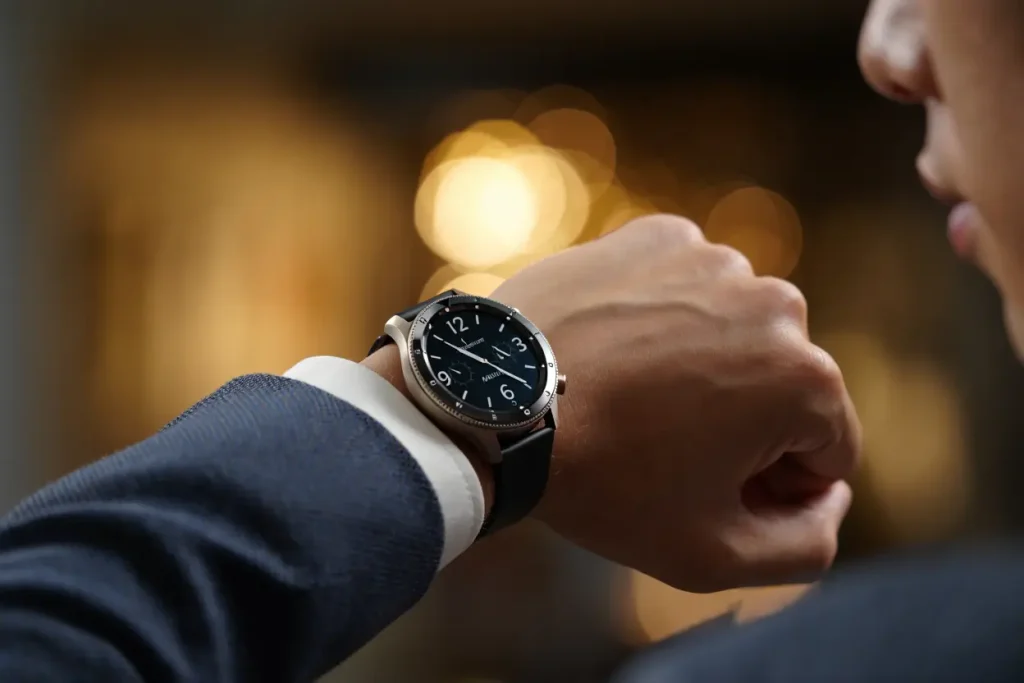
The phrase gets thrown around a lot, so let us define it. A premium smartwatch model in 2026 typically starts around $500 and climbs past $1,000 for the true flagships. At that price, you should expect a sapphire crystal display — the same scratch-proof glass used in luxury mechanical watches — and a case made from titanium, stainless steel, or ceramic rather than aluminum or plastic.
Beyond materials, the top premium tier is where you find the most advanced health tech first. Features like blood pressure monitoring, advanced sleep apnea detection, and multi-day ECG analysis usually debut on premium models before trickling down. You are partly paying to be first.
Software support matters too. Premium watches tend to get longer update commitments from manufacturers — four to five years of OS updates versus two or three on budget models. Spread over the life of the watch, that longer support window is part of what justifies the price. A $700 watch that stays current for five years costs less per year than a $300 watch replaced after two.
Finally, there is the intangible part: how it feels. A high-end wearable has a satisfying weight, a crown that turns with precision, buttons that click crisply, and a strap that feels expensive. You notice these details dozens of times a day. They are hard to quantify and easy to appreciate.
Smartwatch High End: What Your Money Actually Buys
Before looking at specific models, it helps to know where the extra money goes. The display is the first thing. Premium watches use brighter AMOLED panels with sapphire coating, readable in direct sunlight and resistant to the scratches that ruin cheaper screens within months. If you have ever watched a plastic-covered budget watch turn into a scuffed mess, you know why this matters.
The case and build come next. Titanium is the premium material of choice — as strong as steel at nearly half the weight. Ceramic backs allow wireless charging and cellular signals to pass through while feeling cool and smooth. These materials cost real money to machine, and the difference is obvious the moment you pick the watch up.
Health sensors are the third pillar. The best optical heart rate arrays, medical-grade ECG, skin temperature, blood oxygen, and in some 2026 models, non-invasive blood pressure estimation and blood glucose trend monitoring. Premium watches also tend to have better sensor placement and more sophisticated algorithms, which means the numbers are not just more numerous but more trustworthy.
Battery and charging round it out. High-end models increasingly offer multi-day battery despite bright displays, plus fast charging that adds a day of power in fifteen minutes. Wireless charging is standard, and some support reverse wireless charging from your phone — handy when you are traveling without the puck.
The Best Smartwatch High End Picks for 2026
These are the premium watches that justify their price tags, ranked by overall excellence.
Smartwatch High End: 1. Apple Watch Ultra 3 — From $799
The Ultra 3 remains the benchmark for the premium smartwatch category. The 49mm titanium case is virtually indestructible, the sapphire front crystal shrugs off rocks and doorframes, and the display hits 3,000 nits — readable in any light on earth. Battery life runs 36 hours normally and 72 in low-power mode, which finally makes sleep tracking practical on an Apple Watch.
What sets it apart is the depth of the ecosystem. Precision dual-frequency GPS is accurate enough for serious runners and hikers. The depth gauge and water temperature sensor serve divers. Crash detection, satellite SOS via iPhone, and the loudest speaker on any smartwatch add genuine safety value. If you are on iPhone and want the best with no compromises, this is the default answer in the premium tier.
Smartwatch High End: 2. Samsung Galaxy Watch Ultra 2 — From $649
Samsung’s answer to the Ultra is a compelling premium alternative for Android users. The titanium cushion case looks distinctive, the sapphire display is gorgeous, and Samsung’s BioActive sensor stack now includes blood pressure monitoring and advanced sleep coaching that genuinely helped testers improve their sleep habits.
Battery life is around 48 hours, or up to 100 in power-saving mode. The rotating bezel is gone in favor of a touch bezel, which some longtime fans miss, but the overall package is refined. It pairs best with Samsung phones but works with any modern Android. At $150 less than Apple’s Ultra, it is the value play in the ultra-premium bracket.
3. Garmin Fenix 8 Pro — From $999
For athletes who want the premium smartwatch experience without giving up serious training tools, the Fenix 8 Pro is unmatched. The titanium bezel, sapphire lens, and 47mm case survive anything. Garmin’s training readiness, VO2 max, heat acclimation, and multi-band GPS are the gold standard — no lifestyle watch comes close for running, cycling, triathlon, or mountaineering.
The 2026 Pro adds a brighter AMOLED display option alongside the traditional memory-in-pixel screen, plus a built-in flashlight that trail runners swear by. Battery life is 16 days in smartwatch mode. Smart features like music, payments, and notifications are all here, though the app ecosystem is thinner than Apple or Wear OS. If training data matters more than apps, this wins.
4. TAG Heuer Connected Calibre E5 — From $1,800
Yes, it runs Wear OS, and yes, it costs as much as a used car down payment. The TAG Heuer Connected is for people who want a luxury smartwatch piece from a genuine Swiss luxury house. The titanium case, ceramic bezel, and sapphire crystal are finished to haute horlogerie standards — the crown alone feels better than entire budget watches.
Underneath the luxury is a capable Wear OS watch with Google apps, heart rate, and GPS. You are paying mostly for the name, the finishing, and the boutique experience. It will not out-feature the Apple Watch Ultra at less than half the price. But nobody buys a TAG for the spec sheet. If you want smart functionality wrapped in true luxury, this is the only authentic option.
5. Huawei Watch Ultimate 2 — From $899
Huawei’s flagship is a premium sleeper hit. The zirconium-based liquid metal case is harder than titanium, the sapphire crystal is flawless, and it is dive-rated to 100 meters with actual decompression data for scuba. Battery life stretches to 14 days — double the Apple and Samsung ultras.
The dual-band GPS is excellent, the health suite covers ECG, arterial stiffness detection, and blood oxygen, and the golf mode includes 15,000 course maps. The weakness remains the app ecosystem outside China. But as pure hardware — materials, battery, sensors — it embarrasses watches costing more. If you can live with Huawei’s software limits, the value is extraordinary.
6. Apple Watch Series 11 Titanium — From $749
Not everyone wants the bulk of the Ultra. The titanium Apple Watch Series 11 delivers the premium Apple experience in a slimmer, lighter package. You get the same S-series chip, the same health sensors, the same watchOS apps — just in a 41mm or 45mm case that slides under a cuff and weighs far less.
Battery life is the standard 18 hours, or 36 in low-power mode, so nightly charging remains the routine. But for office wear, formal occasions, and smaller wrists, the titanium Series 11 is the more elegant choice. The titanium finish also resists scratches far better than aluminum, so it looks new longer.
7. Garmin MARQ Athlete Gen 3 — From $1,950
The MARQ line is Garmin’s idea of luxury: a high-end tool watch machined like a fine instrument. The Athlete Gen 3 combines the full Fenix feature set with a titanium case, sapphire lens, and detailing — knurled bezel, applied indices — that recalls premium mechanical sports watches. It is the watch for the person who has everything and wants their training computer to look like it.
Functionally it matches the Fenix 8 Pro, so you are paying roughly double for the elevated design and exclusivity. That is a lot. But the MARQ exists for buyers who find the regular Fenix too utilitarian. If you want the best sports watch that also works with a suit, this is it.
8. Withings ScanWatch Horizon 2 — From $549
The Horizon 2 takes a completely different approach to premium: it looks like a luxury dive watch, with real hands, a rotating bezel, and a stainless steel case — but hides ECG, SpO2, sleep apnea detection, and 30-day battery inside. Nobody will guess it is smart until you show them the tiny digital display.
This is the premium pick for people who dislike the gadget look. It will never run apps or show colorful widgets, and that is the point. For health tracking wrapped in timeless design with month-long battery, nothing else in the luxury tier comes close.
Smartwatch High End vs Mid-Range: Is the Premium Worth It?
This is the question everyone asks, and the honest answer is: it depends on what you value. A $300 mid-range watch in 2026 does the basics brilliantly — heart rate, GPS, notifications, decent battery. For many people, that is genuinely enough, and the extra $400+ for a premium model buys refinements rather than revolutions.
Where premium earns its keep is longevity. Sapphire crystals do not scratch, titanium does not dent like aluminum, and longer software support means the watch stays useful for years. A mid-range watch often looks tired after 18 months of daily wear. A well-made premium watch can look new after three years. If you keep devices a long time, the cost per year narrows considerably.
Health accuracy is the other real differentiator. Premium sensors with better placement and processing produce data you can actually act on — HRV trends, ECG readings your doctor will take seriously, sleep staging that matches dedicated trackers. Mid-range watches give you the same categories of data with more noise. If you train seriously or monitor a condition, that accuracy gap matters.
The luxury tier above $1,000 — TAG Heuer, Garmin MARQ — is about desire, not need. Nobody needs a $1,800 Wear OS watch. People buy them because they love how they are made. That is a perfectly valid reason, as long as you are honest with yourself about it.
How to Choose the Right Premium Watch
Start with your phone. Apple Watch only works with iPhone, and most advanced features of Samsung’s watches need a Samsung phone. Garmin, Withings, and Huawei play nicely with both platforms. Buying a premium watch that cannot talk to your phone properly is an expensive mistake.
Next, be honest about your wrist and lifestyle. The 49mm ultras are fantastic but overwhelming on wrists under 160mm. If you wear suits, the slimmer titanium models or the disguised Withings make more sense than a chunky adventure watch. Try them on in a store if you can — photos do not convey size.
Think about which health metrics you will actually use. Everyone likes the idea of ECG, but if you have never wanted one before, you may not miss it. Sleep tracking, on the other hand, benefits almost everyone — so favor watches with comfortable night wear and multi-day battery if sleep data appeals to you.
Finally, set a real budget and stick to it. The premium watch market is designed to tempt you upward — “for just $200 more…” is the most expensive sentence in tech. Decide what the watch must do, find the cheapest model that does it well, and only spend more if the upgrade genuinely excites you.
Caring for Your Premium Smartwatch
A premium smartwatch deserves better care than a disposable fitness band. The good news is that premium materials are easier to maintain than you might expect. Sapphire crystal barely scratches, but the case and strap still benefit from attention. Rinse the watch under fresh water after workouts or swimming — sweat and salt are the enemies of every strap material, including expensive ones.
For titanium cases, a soft microfiber cloth keeps the finish looking new. Small scratches on brushed titanium can be minimized with a gentle Scotch-Brite pad, though deep gouges are permanent. Stainless steel polishes up beautifully with a jewelry cloth. If your watch has a leather strap, keep it away from water and workouts; save leather for the office and swap to fluoroelastomer or nylon for exercise.
Battery health deserves a mention too. Modern lithium batteries degrade slowest when kept between 20 and 80 percent charge. You do not need to obsess over this, but enabling any optimized-charging feature and avoiding leaving the watch on a hot charger all day will keep the battery strong for years. With basic care, a premium watch will look and perform like new long after budget models have been replaced.
Frequently Asked Questions
What is the best smartwatch high end model in 2026?
The Apple Watch Ultra 3 is the best overall premium smartwatch for iPhone users, with unmatched build quality, display, and ecosystem. For Android, the Samsung Galaxy Watch Ultra 2 or Garmin Fenix 8 Pro take the crown depending on whether you prioritize smart features or athletic training tools.
Are luxury smartwatches worth the money?
Watches in the $500–$1,000 range are worth it if you value sapphire displays, titanium build, advanced health sensors, and longer software support — they genuinely last longer and do more. Above $1,000, you are paying for brand prestige and finishing rather than function, which is fine if that is what you want.
How long do premium smartwatches last?
Expect 4–5 years of software updates and 3–4 years of strong battery health from a premium model. The sapphire crystal and titanium case will look good far longer than that. Battery replacements are available for most premium models and can extend useful life further.
Do I need a premium device for accurate health tracking?
Not necessarily. Mid-range watches track heart rate and sleep reasonably well. Premium models pull ahead in ECG accuracy, blood pressure features, and advanced metrics like HRV trends and sleep apnea detection. If you have a specific health concern or train competitively, the premium sensors are worth it.
When you’re getting started with Smartwatch High End, the biggest mistake is trying to do everything at once. The people who get the best results from Smartwatch High End start small, focus on one specific goal, and build from there. Think of Smartwatch High End as a skill you develop over time, not a switch you flip. Each week you spend working with Smartwatch High End, you’ll notice patterns in what works and what doesn’t.
Not every approach to Smartwatch High End is right for every person. Your budget, your experience level, and your end goal all shape which Smartwatch High End strategy makes sense for you. Someone exploring Smartwatch High End for the first time needs different guidance than someone who’s been using Smartwatch High End for months. The advice below assumes you’re past the absolute basics but still figuring out the details.
The real payoff from Smartwatch High End comes from consistency, not perfection. You don’t need the most expensive tools or the most advanced setup to benefit from Smartwatch High End. What matters is showing up regularly, paying attention to results, and adjusting as you learn. Most people overthink Smartwatch High End at the start and underthink it later.
One thing that surprises newcomers to Smartwatch High End is how much small details matter. Two people can follow the same Smartwatch High End guide and get very different results because of tiny choices they make along the way. That’s why understanding the principles behind Smartwatch High End matters more than memorizing steps. Once you grasp why Smartwatch High End works the way it does, you can adapt to any situation.
Final Thoughts
The smartwatch high end market in 2026 offers something for every kind of premium buyer — the indestructible Apple Watch Ultra 3, the athletic Garmin Fenix 8 Pro, the luxurious TAG Heuer Connected, and the stealthy Withings Horizon 2. Pick the one that matches your phone, your wrist, and your ambitions, and it will serve you well for years. Premium is not about spending more; it is about buying once and buying right.